Wednesday, January 18, 2012

Send Off: Florida Wildlife Corridor Expedition

Just before Carlton pushes off for the first day of his expedition, he and I pose for a photo on Florida Bay


This morning Jerry Lorenz and I drove out to Flamingo in Everglades National Park to send off a friend and fellow conservation photographer Carlton Ward Jr. who embarked on a 1,000 mile expedition. This adventure is known as the Florida Wildlife Corridor and will help to lay the foundation of a conservation initiative linking critical fragmented landscapes. It's an extremely bold task and I'm so upset I can't go with him. Joining Carlton, is filmmaker Elam Stoltzfus, and bear biologist Joe Gutherie, two brave souls who say they're "in it to win it." Carlton's expedition will meet up with artists and paddlers all over Florida as they make their way north. I'm planning on meeting them on the 24th while accompanying the Arthur Marshall Foundation who are on their own paddling expedition to show the importance of our waterways in south Florida. First, though he'll have a hearty paddle up to Avocado Creek and then a rough slog atop jagged limestone through miles of sawgrass in Shark Slough. When I said goodbye to Carlton and his crew today, he said, "I'll see see you in a few days!" With a nervous tone I replied, "Yeah, I hope so..."

State director of research Jerry Lorenz speaks on behalf of Audubon Florida about the importance of Florida Wildlife Corridor at the edge of Florida Bay. 

Saturday, January 14, 2012

Winter, By Any Other Name...

Adam Chasey climbs a palm tree in Key Largo to retrieve a coconut for his dog River  

No one takes our winters seriously. Here we are, having to put on jeans and fleeces and I get no sympathy from my northern friends. It's rough I tell you. My brother, Will, visiting from North Carolina for the weekend couldn't believe we spent all day in swim suits and tank tops while lounging at a bayside park in the middle of January. While the rest of the country is bundling up and tucking their cold feet into the cracks of a warm couch, we're firing up the grill and chasing sunsets. Two days ago I watched an excited couple walk through the neighborhood carrying a bottle of wine and a full couch to the end of a boardwalk in Key Largo. What a crazy thing. People scoff, saying, "Pshh, you have no seasons," in a tone that sounds more like, "You have no soul," but I'm okay with that. They can keep their gray skies and icy roads. I'll stay down here with the other lost sun-kissed souls. 

Tuesday, January 10, 2012

The Price of Science


Unknown fish species, found off Curacao this past December

In 1997 Dr. Grant Gilmore, a marine biologist, captured an unidentified fish off the coast of Cuba. The scientific community had never documented this species before. In order to be designated a new species, however, he needed two samples. Hopeful, he kept his ear to the ground waiting for someone to find his missing paratype. Fourteen years later, this December he received word from a commercial fish collector based in the Keys who captured an unknown species matching the description of his original holotype. Unfortunately he wasn't the only one in the market for rare fish. Collectors all over the world also seek out coastal businesses and divers to purchase unique species for their aquariums, and they're willing to pay top dollar. Dr Gilmore knew he didn't have long before it disappeared into a private collection so he called Dr Jerry Lorenz to help document its existence. That same day, a Japanese aquarist purchased the 3-inch fish for $4,500. This gave us a two-day window to make a positive id. 

Helping hands make sure the fish doesn't leap out of the make-shift tank

The next morning Jerry, his wife Linda, and I traveled to Marathon and spent twenty minutes photographing a very stressed fish. Pulled from 400 feet below the water's surface, its colors changed dramatically since original capture making it impossible for Dr Gilmore to confirm it as a paratype without closer inspection; a sad loss for science. The fish now swims in a private aquarium in Japan and poses an important question about the relationship between science and its stakeholders. 


The free market has subsidized countless scientific revolutions over the last century. By placing a value on discovery, the researchers, explorers, and biologists of the world can afford to dedicate their lives to opening new doors and expanding our knowledge of the living world. Scientists depend on the funding from investors to conduct their research, just as fish collectors depend on buyers to finance their operational costs. In this fiscal marriage, it seems inevitable that the two will eventually quarrel. What happens then, when the cold heart of capitalism starts steering the altruism of science? Should the same laws that govern supply and demand be allowed to creep their way into the scientific method? 


Tuesday, January 3, 2012

Lost and Found

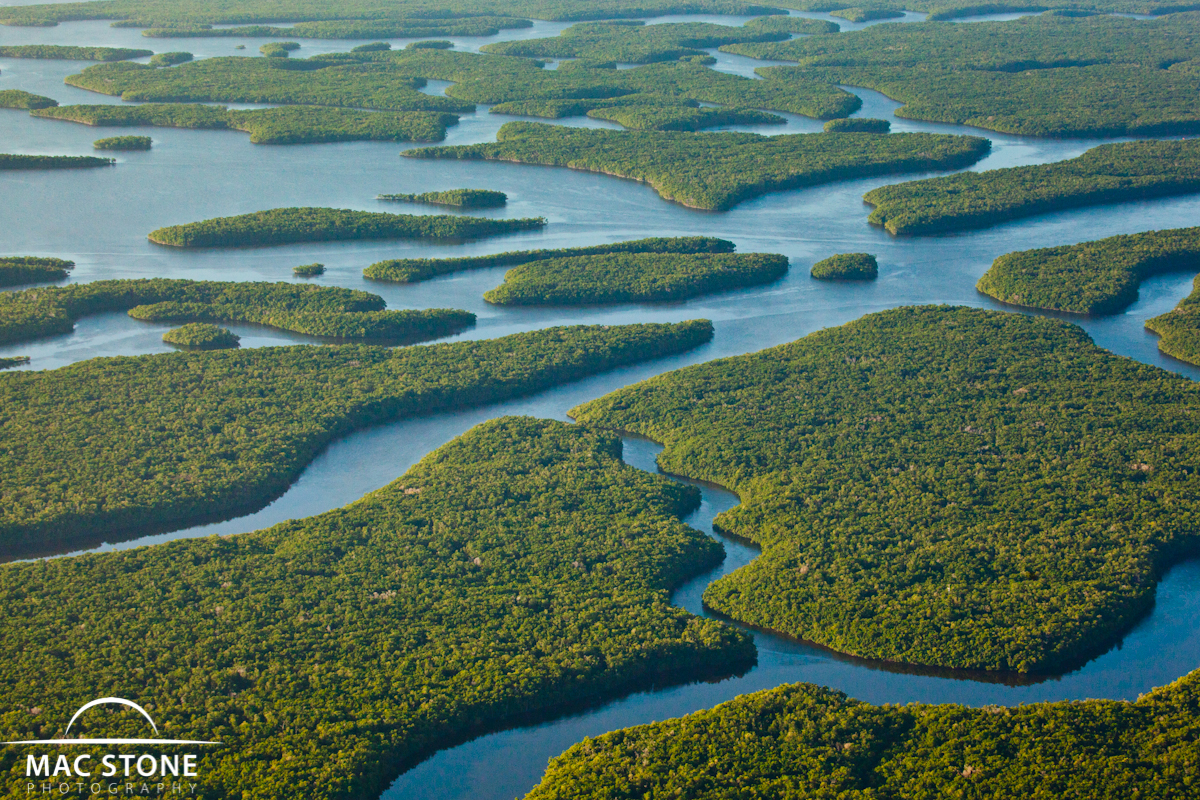
Florida Bay mangrove islands with the Gulf Stream clouds and Florida Keys in the background.

I love watching adventure shows where the protagonist drops in on an island and must use his immediate resources to survive or escape. I'm always skeptical too, of the serendipity that Bear Grylls just happens to find a 30 foot rope, a lighter, or gallon jugs half-filled with potable water washed up on the shores. Surely, the producers must have planted some of that stuff before filming. I held this skepticism until I started exploring the islands in Florida Bay for our spoonbill research with Audubon. Now, I find myself eager to go to work if not just for the spoonbills but also because I never know what I'll find while walking through mangrove tangles or kayaking along the mud flats.

Mangrove prop roots act as nets trapping all matter of floating debris.

The most common things I find are colorful stone crab buoys which at a distance have fooled me to believing there were flamingos in the central bay. I have also started a collection of drink cozies with faded tackle shop labels. Antique bottles are a great treasure to find and I have a couple that date back a century. There's no shortage of homeless sandals either. Crocs brand are the most common, and if anyone needs a size 9, 10, or 12, then I have you covered. Why is it always the left shoe that people lose?

A boat enters into Trout Creek in the northeastern Bay. 

It's no surprise really. With all the boaters, residents, and visitors to the Keys and Everglades a few things are bound to arrive on the islands of this 850 square-mile wilderness. For years the Everglades was renowned for its lawless backcountry allowing drug smugglers a perfect location for trafficking. Veteran fishing guides who wish to remain nameless, muse on the days of their biggest catches, landing large "square groupers," caught in the tidal flats which would fetch $200,000 at market price.


While contraband busts rarely run the headlines, the Everglades remains vast and largely unpatrolled by park officials. Just last week, while exploring an island in the northwest Bay, I saw something strange washed up on a sandy beach.

A homemade Cuban life raft washed up on the shore of an island in the northwest Bay.

A blue vessel, made of canvas stretched over two large tire inner tubes with oar-locks, and a heavy plastic keel, sat abandoned at the high tide line. At closer inspection, inside the cockpits were cans of tuna, varying flavors of soda, and a couple of sweaters. Although the labels slightly worn, I could tell immediately where this raft came from. It's incredible to think two people floated in open ocean aboard this backyard-assembled dinghy.  Being only 90 miles from Cuba, Florida Bay is really the perfect destination for refugees. I just hope they didn't get too antsy and try to swim the remaining 5 miles to mainland through the shark and croc-infested water. For a moment, I looked up, scared to find the stranded sailors watching me from the trees, but at this point they were long gone.

A 14 foot American crocodile suns on the banks of Cape Sable in Florida Bay.

I may not be Bear Grylls, but I'd like to think that if I were to be stranded on one of these islands, I'd be able to survive just fine. With my luck, I'd just hop on the next abandoned life raft and paddle safely to shore, gorging on canned tuna and orange soda.

Thursday, December 29, 2011

Christmas Bird Count!

A peregrine falcon must have scared this flock of shorebirds in Florida Bay. The sound they made while flying was incredible.

Every year National Audubon conducts bird counts in each state to assess the health and status of bird populations around the country. From December 14th through January 5th of 2012, thousands of volunteers selflessly dedicate their time to slog, hike, boat, and paddle with guide books, binoculars, and checklists in hand. For many, this has become a family tradition as it's a great excuse to get outside and see some incredible wildlife while contributing to conservation.

Rafael uses a scope to identify shorebirds in the distance at one of the keys in central Florida Bay

To be honest, I was a little nervous about my first count. I know my wading birds and raptors fairly well but identifying shorebirds and songbirds is so frustratingly difficult for me that I feel I'm a disgrace to the Audubon name. My redemption would be found in calling out the bright pink roseate spoonbills flying against the stark blue sky. Fortunately, I was assigned to be captain of a boat with two of the most knowledgable birders and naturalists I've ever met. Rafael Galvez and Michelle Davis just finished a bird count on the Dry Tortugas two days prior and politely assured me all I would have to do is steer the boat. Huge sigh of relief.


The Tavernier Science Center hosted the bird count of Florida Bay and the Upper Keys. With a team of 15 birders, biologists, enthusiasts, and naturalists we scoured the region from 6:30 AM until 6:00 PM. We identified 95 species and counted 11,164 individuals!

Semipalmated sandpiper, as close as I could get with a 400mm lens.

Part of the purpose of the bird count is to also help determine the range and migratory behaviors of certain birds. Our team spent a great deal of time just trying to verify the identity and number of semipalmated sandpipers. Florida Bay, it turns out, is the only place where these birds don't continue to fly south for the winter. Florida Bay is also the only place to find prairie warblers with a distinctive orange coloration in their faces.


The hardest groups to count, however, were the floating mats of cormorants. Any guesses as to how many are in the photo above?


After participating in my first bird count, I can see how it attracts so many volunteers. My group alone accounted for 5,640 birds, which is an incredible sight to behold in an 11 hour period. I would highly recommend the Christmas Bird Count to anyone looking to spend a day outside for a cause certainly worth supporting. I'm definitely going to make it an annual tradition, wherever I might be.

Wednesday, December 21, 2011

Roseate Spoonbills

A mix of adult and juvenile spoonbills in flight at Snake Bight

Starting in November, I accepted a small promotion within Audubon's Tavernier Science Center office as head of spoonbill research. For the last two years I have been working with prey-base fish monitoring, so this will be a much welcomed change. The spoonbill position requires that I go into the field every week to collect data on spoonbill populations and their nesting success for the entire Florida Bay. Doing so means that I must visit nearly every island in search of spoonbills and report back to state director of research, Jerry Lorenz. So far it's been slow as water levels are still fairly high, but we're not quite sure what to expect this year. Already we're seeing some shifts in their range, but only recently did I find my first nest.

The first spoonbill eggs found on an island in the central part of Florida Bay

Trends have shown an overall decline in spoonbill nesting success in Florida Bay. In the northeast Bay, colonies once hosted up to 600 nesting pairs, now we're struggling to find a handful. These declines started right after the construction of the C-111 canal that drained much of the Taylor Slough watershed out to the Atlantic. Our research is helping to provide water management authorities with the empirical data they require to shape policies and change the flow of water. It is our belief that bringing more freshwater back into the system will provide more productive foraging grounds for spoonbills and other wading birds.


Only time will tell us if we're on the right track as Everglades restoration plans are underway. In the mean time, I'll enjoy trudging through mangrove islands and boating across the Bay in search of these pink beauties.

Sunday, December 18, 2011

Where the Wild Things Are


That's what Hannah said as she walked, crunching the brittle ground with every step under a palm tree canopy lining the shore of Myakka River. It was perfect the way it hit her, like recognizing an old friend. She couldn't stop smiling, gazing around at the strange landscape. And I felt the same way too when I first visited Myakka River State Park ten years ago. There's something incredibly wild, fabled, and yet, familiar about this place, like we've been told about it before.


As a dedicated member of the sunshine state's PR team, it's my job and great pleasure in life to reconnect people with this fantastical alternative reality that is old Florida. Just a few days ago we were paddling down the Turner River when a visiting friend from California (home of the redwood forest, giant sand dunes, and some of the most dramatic vistas in the country) said, "This reminds me of Lord of the Rings." I was beaming with pride. For all of us lucky folks that call this wonderful state "home," take the reins and share your backyard with your out-of-town families this holiday season. Take them to one of your favorite places. Show them around Florida; where prehistoric reptiles roam the rivers, emerald springs boil from the earth, and fluorescent-pink birds decorate the blue sky. It is, after all, where the wild things are. 


Thursday, December 15, 2011

Florida's Special Places: Corkscrew Swamp


About four months ago I started a proposal with the help of National Geographic producer Katie Carpenter and director of Audubon Florida Eric Draper to create short HD videos highlighting Audubon's role in protecting Florida's special places. The idea came at the heels of my Florida Bay videos as I began to realize that a great deal of the public has very little clue of what this organization does around the state. We thought that combining interviews with compelling imagery and videography would be a great way to connect to the masses.


October was my first shoot, as it was a time-sensitive issue. Around the second week of that month every year wild sunflowers bloom and surround Corkscrew Swamp Sanctuary. It's a spectacular sight to see and if we were going to include it in the video we wanted to capture it at its peak.

Jason Lauristen (left) and Adam Chasey roll through a trail of sunflowers at sunrise

Thankfully, Jason Lauritsen the assistant director of Corkscrew was willing to wake up before dawn and pick us up in one of their swamp buggies. This put us up above the sunflowers and offered a really unique perspective that I otherwise wouldn't have been able to get.


I spent the next two days slaving away from dawn until dusk capturing as many close-up and wide angle shots as I could before wrapping it up. The devil is in the details and I'm still learning to think like a videographer. Because we have a set budget I had to treat the assignment like I would never be coming back, so the added pressure helped to keep me shooting all day. A lot goes into these small productions and while digital SLRs are great in that now include high definition video capabilities, there's no limit on the amount of accessories you need to make it fluid. I'm usually a very light traveler (in comparison to some other photographers) because I like staying mobile. No such luck on this trip. My packing list included:

Canon 5d mark ii camera body
Canon 24-105mm lens
Canon 16-35mm lens
Canon 100-400mm lens
Canon 100mm macro lens
Redrock Micro shoulder mount
Manfrotto tripod with fluid head
Manfrotto tripod with ball head
Two Canon external strobes
Rode Videomic Pro
Sennheiser wireless mics
Diffuser
4 Batteries
100gb of flash memory cards
500gb external hard drive
MacBook laptop

And there's still more I've acquired since then! Luckily I drove my truck. Although, the truck didn't help much when I had to schlep most of this gear down the boardwalk all day. I hope you enjoy the video. Feel free to share it with friends. It was edited by Josh Cook in New York and will be the first in several more to come.

Tuesday, December 13, 2011

Turner River

The Turner River


Two places that I've been hearing about since I arrived in 2009 are the Dry Tortugas and the Turner River. While it's shameful that I still haven't made it to the islands off the coast of Florida, Turner River is a lesser-known, but equally beautiful area in Everglades National Park, just two hours from my doorstep. A group of ten friends got together this weekend to paddle the river on a ten-mile one-way trek out to Chokoloskee. I knew it was going to be a promising trip when a one-eyed, nine-foot alligator was guarding the entrance.

Whitewater rushes out of a mangrove forest along the banks of the Turner River


For the first three miles we floated through freshwater mangrove tunnels. Our paddles were nearly useless so we grabbed the limbs like monkey bars and swung our way until reaching open water. To my amazement, we came upon a ripping tributary that was gushing whitewater over a mangrove bank. I have never seen whitewater in the Everglades, frankly because there just isn't enough relief to create riffles. I didn't have enough time to go find the source, but it's very possible it was spring-fed.

Garl Harrold and Linda Lorenz happy to arrive at Chokoloskee

After four hours on the water, we made it to Chokoloskee, just barely out-running a storm as the sun was setting. I'd love to go back to explore those mangrove tunnels a little more with my camera. There are certainly more photos to be had in such a primeval place. Until then, I'll just enjoy having spent a wonderful afternoon with my friends in another one of Florida's hidden gems.

Audubon Aventure Sunday crew

Saturday, December 10, 2011

Winter's Approach

Rainbow over the mangrove shoreline of Madiera Bay in Everglades National Park

We had our first bite of winter last week. It's strange. One day I'm snorkeling in the Bay, the next, I'm wearing a ski hat and winter coat while boating to work. I love this time of year. Migratory birds are filling the skies and roseate spoonbills are starting to build nests. The mornings are electric with piercing warm light that seems to last for an hour. On the open water, crisp zephyrs rip across the Bay ushering in the seasonal shift. The wind is changing and there's no better place to put it than a couple of sails.

Sailing on Florida Bay we met up with Jerry Lorenz on his boat, R. mangle 

It seems like it's my first weekend in quite some time where I'm not running around at a thousand miles per hour trying to juggle deadlines and catching flights. So when my friend Steve Pollock invited me out on his newly restored sailboat, it actually felt strange to say yes. Sometimes the grind keeps me going, it keeps me fulfilled knowing that my time bears fruit. Sometimes though, it's just nice to turn off the motor and go slow for a change.

A pod of dolphins play behind the R. mangle